
Fibermaxxing 2026: The Simple Fiber Trend Boosting Gut Health and Mental Wellness
If you would like to have a post considered for publication on HappiHuman.com please send an email here.
Have you noticed how fibre is suddenly everywhere in the wellness conversation this year? From TikTok reels to nutrition podcasts, the term fibremaxxing is taking off, and for very good reason.
As a Registered Holistic Nutritionist (R.H.N.) specializing in neuronutrition at HappiHuman.com, I have seen firsthand how intentionally ramping up your daily fibre intake can be a true game-changer for both gut health and mental clarity.
In my earlier post on Gut Health and Mental Wellness: Understanding the Nutrition Connection, we explored the powerful gut-brain axis. Fibremaxxing takes that connection even deeper by giving your microbiome the exact fuel it needs to support mood, focus, steady energy, and overall well-being.
Let’s dive right in and explore why this accessible 2026 trend is worth embracing right now.
What Exactly Is Fibremaxxing and Why Is It Trending in 2026?
Fibremaxing simply refers to maximizing your intake of high-quality dietary fibre from real, whole-food sources to reach or exceed the recommended 25 to 38 grams per day. Most of us are only hitting around 15 grams, which leaves our beneficial gut bacteria undernourished and the gut-brain connection under-supported.
This trend is gaining real momentum because it is practical, sustainable, and backed by growing research on the microbiota-gut-brain axis. It pairs beautifully with what we have already covered here, around managing insulin resistance naturally and the surprising benefits of magnesium for brain health. The best part? You don’t need fancy supplements or complicated protocols. Just smart, fibre-forward choices that feel nourishing and doable every single day.

How Fibre Powers Your Gut-Brain Axis and Mental Wellness
When your beneficial gut bacteria ferment soluble and prebiotic fibres, they produce short-chain fatty acids (SCFAs) such as butyrate, acetate, and propionate. These compounds are like super-fuel for your body and brain.
They help:
Strengthen the intestinal barrier and reduce systemic inflammation.
Support stable blood sugar levels and improved insulin sensitivity.
Calm neuroinflammation and influence neurotransmitter production (remember, roughly 90 percent of your serotonin is made right in your gut).
Promote better mood, reduce anxiety, sharpen focus, and even protect against cognitive decline.
I love how this simple dietary shift delivers such wide-reaching benefits - and you should, too!
Clients in my neuronutrition practice often tell me they notice more stable energy, fewer sugar crashes, improved digestion, greater satiety, and a brighter outlook once they start fibremaxxing the right way.
You may also like


Real Benefits You Can Expect When You Fibremaxx
In my practice, I have watched clients experience noticeable shifts once they increase fibre gradually and consistently:
More steady energy throughout the day with fewer blood sugar crashes
Better mood regulation and less brain fog
Comfortable digestion and regular bowel movements without the bloat
Greater feelings of fullness that make healthy eating feel effortless
Stronger immune resilience and overall vitality
For anyone navigating metabolic concerns or sugar cravings, fibre acts as a natural ally that works in harmony with magnesium-rich foods like nuts, seeds, and leafy greens to support calm nerves and restorative sleep.

My sessions with Kelly blew my mind.
As someone who has been studying nutrition for a long time, I couldn’t believe how much information I took away. After years of struggling with my mental health, Kelly detected cerebral inflammation and has given me some really helpful suggestions to reduce this. I truly believe this was life-changing and actually worry about what might have happened if we never had this call. Kelly is friendly, passionate, super knowledgeable and very trustworthy. I 100% recommend her!
Rose B. United Kingdom
Why Choose Me?
I never met a person that didn’t have some resistance to change. I take the time to get to know my clients fully, find their internal motivation and set them up for long-term success that’s personalized.


How to Start Fibremaxxing Without Discomfort
The secret is to go slow and listen to your body. Increase your fibre by about five grams per week and be sure to drink plenty of water.
The best strategy is to focus on a variety of fibre types from whole foods, including:
Prebiotic stars such as garlic, onions, leeks, asparagus, and Jerusalem artichokes
Oats, barley, and other whole grains
Beans, lentils, chickpeas, and legumes
Chia seeds, flaxseeds, and berries
A rainbow of colourful vegetables plus dandelion greens or chicory root tea
Just be aware of how your body responds to the increased fibre. If you deal with IBS or any other gut ailment like SIBO, be sure to talk to your holistic nutritionist or functional medical practitioner before bumping up your fibre intake, as too much of the wrong kind of fibre all at once can spell bloating, gas, and discomfort. If you fall into this camp, reach out - I can help you personalize your nutrition and make the transition to a fibre-filled diet easier and doable for you. After all, not all guts are created equal!
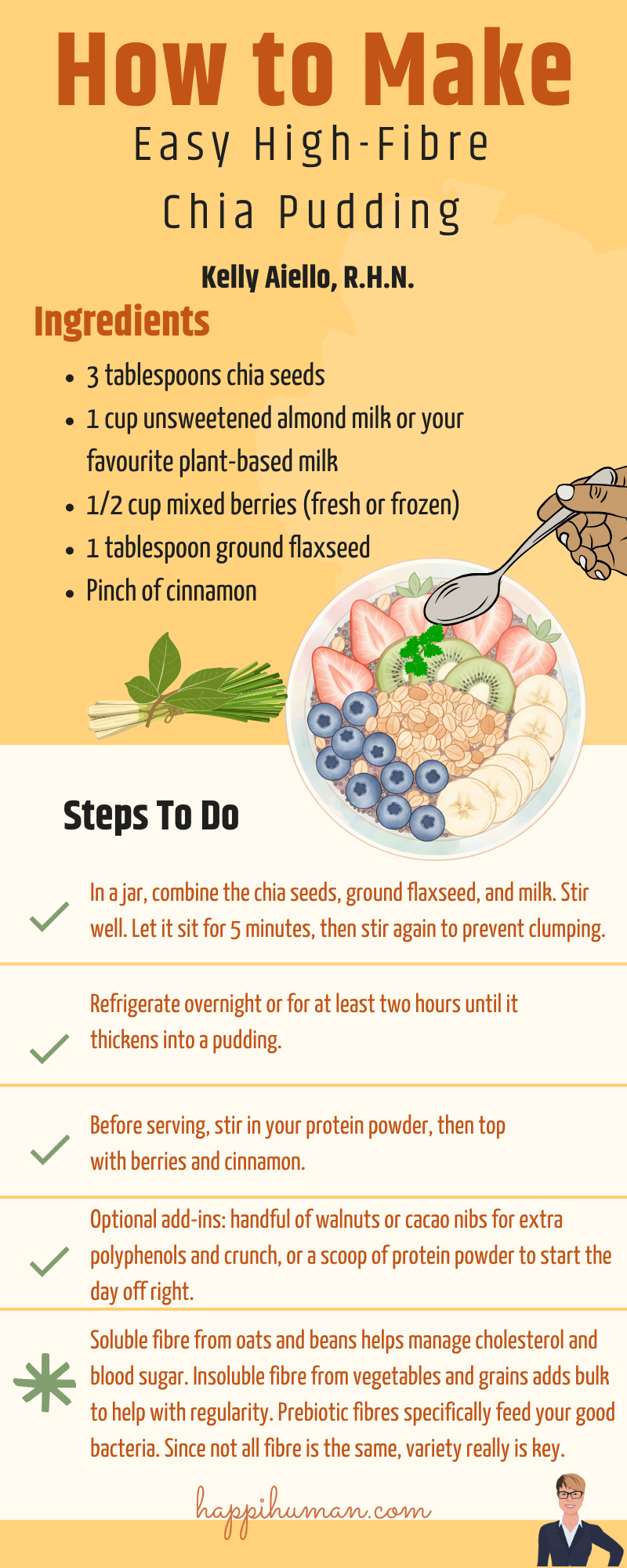
Easy High-Fibre Recipe: Gut-Boosting Berry Chia Pudding
Now, it wouldn’t be fair to suggest you consider fibremaxxing without offering at least one strategy to help make this happen.
So, let me introduce you to a make-ahead recipe that is a client favourite. Plus, it delivers roughly 10-12 grams of fibre per serving. It can work beautifully as a quick and delicious breakfast or an afternoon snack. And the best part? It tastes like a treat while feeding your good bacteria all day long.
Ingredients (serves 1):
3 tablespoons chia seeds
1 cup unsweetened almond milk or your favourite plant-based milk
1/2 cup mixed berries (fresh or frozen)
1 tablespoon ground flaxseed
Pinch of cinnamon
Optional add-ins: handful of walnuts or cacao nibs for extra polyphenols and crunch, or a scoop of protein powder to start the day off right
Instructions:
In a jar, combine the chia seeds, ground flaxseed, and milk. Stir well. Let it sit for 5 minutes, then stir again to prevent clumping.
Refrigerate overnight or for at least two hours until it thickens into a pudding.
Before serving, stir in your protein powder, then top with berries and cinnamon.
Simple, satisfying, and your gut and brain will thank you.
Common Fibre Myths Finally Busted
Myth: All fibre is created equal.
Fact: Soluble fibre from oats and beans helps manage cholesterol and blood sugar. Insoluble fibre from vegetables and grains adds bulk to help with regularity. Prebiotic fibres specifically feed your good bacteria. Since not all fibre is the same, variety really is key.
Myth: You need expensive supplements to fibremaxx.
Fact: Whole foods deliver fibre plus synergistic vitamins, minerals, and polyphenols that work together beautifully. Supplements can help fill occasional gaps, but real food always comes first.
Myth: More fibre is better right away.
Fact: A gradual increase gives your system time to adjust and delivers the best long-term results without the discomfort.
Ready to Make Fibremaxxing Work for Your Gut and Mind in 2026?
Increasing fibre is straightforward, affordable, and incredibly effective, yet every body is unique.
If you are dealing with mood challenges, digestive concerns, low energy, sugar cravings, or you simply want personalized guidance on neuronutrition, gut healing, or creating a sustainable fibremaxing plan that fits your lifestyle, I invite you to book a consultation with me.
My neuronutrition coaching programs have helped many clients achieve lasting improvements in gut health, mental wellness, and metabolic balance. Together, we can design a personalized approach that feels nourishing and sustainable - just for you.
What is one high-fibre food you are most excited to add this week? Drop it in the comments below. I read every single one and love hearing from our HappiHuman community.
Stay happi and well-nourished,
Kelly

[Medical Disclaimer]
Please consult with your doctor(s) before starting any new mental or physical health improvement program. The advice I offer is not intended to replace that of your medical practitioner. I am not a medical professional, nor am I qualified to diagnose, cure treat, or prevent disease. The advice I provide on this website is intended for a broad and diverse audience, and as such, deals with general lifestyle concepts, not specific healthcare advice. This material disclaims any liability or loss in connection with the advice expressed herein.